
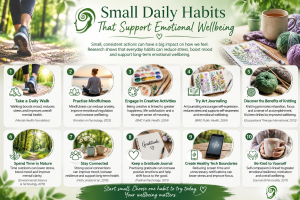
 In a world that often feels fast-paced and demanding, emotional wellbeing isn't usually built through dramatic life changes. More often, it's the small, consistent habits we practise every day that help us feel calmer, more resilient, and better equipped to handle life's challenges.
Research continues to show that simple activities such as walking, creative hobbies, mindfulness, and social connection can have a meaningful impact on mental and emotional health. The good news? Many of these habits are easy to incorporate into even the busiest schedules.
Why is important to include daily habits for improving your emotional wellbeing?
Emotional wellbeing refers to our ability to manage emotions, cope with stress, build positive relationships, and maintain a sense of purpose and satisfaction in life. While everyone experiences difficult days, regular wellbeing habits can help create a stronger emotional foundation over time.
Small actions performed consistently can reduce stress, improve mood, support self-esteem, and increase feelings of connection and fulfilment.
In one of our articles, we were talking about our window of tolerance and how we can reach the two states of arousal when we are overwhelmed by stress and life unexpected events and what we can do to enlarge the window of tolerance.
Today we want to talk in depth about how through daily practice we can enlarge the window of tolerance and improve our wellbeing.
- Take a daily walk.
Walking is one of the simplest yet most effective ways to support emotional wellbeing. Regular movement helps release endorphins, reduce stress hormones, and improve overall mood.
Even a 10- to 20-minute walk can provide mental benefits, especially when taken outdoors. Walking in nature may offer additional advantages by helping reduce feelings of stress and mental fatigue. Research has also found that mindful walking can increase positive emotions and improve emotional resilience.
Tips to make walking a daily habit
- Walk during your lunch break.
- Take a short walk after dinner.
- Leave your phone in your pocket and focus on your surroundings.
- Explore a local park or green space.
- Walk to work if this is possible.
- Practise mindfulness.
Mindfulness involves paying attention to the present moment without judgment. It encourages awareness of thoughts, feelings, and physical sensations, helping to reduce emotional overwhelm.
Studies have shown that mindfulness practices can support emotional regulation, reduce anxiety, and improve overall wellbeing. Even a few minutes of mindful breathing each day can make a difference.
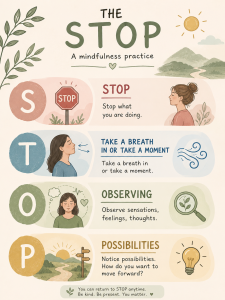 Simple ways to practise mindfulness.
- Spend five minutes focusing on your breath.
- Notice sounds, sights, and sensations during a walk.
- Try a guided meditation app.
- Practise mindful eating during a meal.
- Try STOP an easy mindfulness technique that can help you focus on here and now.(image included in the article)
- Engage in creative activities.
Creativity is not just for artists. Activities such as drawing, painting, writing, photography, baking, crafting, or playing music can all support emotional wellbeing.
Research has found that engaging in creative activities is associated with greater happiness, increased life satisfaction, and a stronger sense that life is meaningful. Creative pursuits can also foster feelings of autonomy, competence, and accomplishment, which contribute to positive emotional health.
Creative habits to try.
- Keep a sketchbook or journal.
- Write for at least ten minutes each day.
- Try photography during your daily walk.
- Experiment with a new craft or creative hobby.
- Discover the benefits of knitting.
 Knitting has become increasingly recognised as a wellbeing-supporting activity. The repetitive rhythm of knitting can promote relaxation, encourage focus, and create a calming sense of routine.
Research involving thousands of knitters has found links between knitting and improved wellbeing, happiness, and stress management. Many participants describe knitting as helping them feel calm, productive, and emotionally balanced.
Knitting can also create opportunities for social connection through community groups, classes, or online communities.
Why knitting supports emotional health?
- Encourages focus and concentration.
- Creates a sense of achievement.
- Provides a break from screens.
- Promotes relaxation and mindfulness.
- Spend time in nature.
Nature has a powerful effect on emotional wellbeing. Whether it's a local park, woodland trail, beach, or garden, spending time outdoors can help reduce stress and improve mood.
Combining nature with walking, mindfulness, or creative activities can amplify the benefits and create a restorative daily ritual.
Easy ways to connect with nature.
- Sit outside with your morning coffee.
- Tend to a garden or houseplants.
- Visit a local green space.
- Watch wildlife or birds for a few minutes each day.
- Make time for meaningful social connection.
Humans are naturally social beings. Regular connection with friends, family, colleagues, or community groups can provide emotional support and reduce feelings of isolation.
Connection doesn't always require lengthy conversations. A quick phone call, coffee with a friend, or participation in a hobby group can strengthen your sense of belonging and wellbeing.
Small ways to stay connected.
- Send a message to a friend.
- Arrange a weekly catch-up.
- Join a local club or community activity.
- Volunteer for a cause you care about.
- Keep a gratitude journal.
Practising gratitude can help shift attention away from daily stressors and towards positive experiences.
Taking a few moments each day to write down things you appreciate may help increase positive emotions and encourage a more balanced perspective.
Gratitude prompts.
- What made you smile today?
- Who helped you recently?
- What are you looking forward to?
- What is one thing you appreciate about yourself?
- Create healthy boundaries with technology.
While technology can help us stay connected, constant notifications and excessive screen time may contribute to stress and mental fatigue.
Creating small boundaries around technology use can support emotional wellbeing and improve focus.
Healthy digital habits
- Avoid checking your phone immediately after waking.
- Schedule screen-free periods during the day.
- Turn off unnecessary notifications.
- Replace scrolling with a hobby or walk.
- Try art journaling for self-expression and reflection.
 Art journaling combines creative expression with personal reflection, using a mix of drawing, painting, collage, colour, lettering, and written thoughts. Unlike traditional journaling, there are no rules or expectations—it's simply a space to explore emotions, record experiences, and express yourself visually.
Research suggests that both creative arts activities and reflective journaling can support emotional wellbeing. Creative activities have been linked to greater happiness, life satisfaction, and a stronger sense of meaning in life, while journaling can help people process emotions and reduce psychological distress. Combining the two through art journaling offers an accessible way to nurture self-awareness and emotional resilience.
Art journaling can be particularly helpful during stressful periods because it encourages mindfulness and provides a non-verbal outlet for feelings that may be difficult to put into words. The process often becomes less about creating something perfect and more about exploring thoughts and emotions with curiosity and compassion. Creative engagement has also been associated with improved wellbeing across different age groups and populations.
Simple art journaling ideas.
- Create a page using colours that reflect your current mood.
- Combine magazine cut-outs, photographs, and handwritten reflections.
- Draw a "mind map" of your thoughts and feelings.
- Use prompts such as "What brought me joy today?" or "What do I need right now?"
- Spend 10 minutes doodling freely without judging the outcome.
Why art journaling supports emotional wellbeing?
- Encourages self-expression and emotional processing.
- Promotes mindfulness and present-moment awareness.
- Reduces pressure to find the "right" words.
- Creates a visual record of personal growth.
- Offers a calming break from screens and daily demands.
Looking for support in creating healthy habits that last?
At Creative Calm Therapy, we help people build personalised wellbeing routines that fit their lives, interests, and goals. Whether you're seeking therapy, creative wellbeing support, or practical ways to nurture your emotional wellbeing, we're here to help.
Contact us today to be the first to hear about our upcoming wellbeing programmes, workshops, and creative resources.
Exciting new wellbeing programmes coming soon!
We recognise that not everyone is looking for ongoing therapy, but many people still want support in creating positive wellbeing habits and routines.
That's why Creative Calm Therapy is currently developing a range of wellbeing programmes, workshops, and creative resources designed to help individuals connect with evidence-based wellbeing practices in a practical and accessible way. These programmes will focus on helping people develop healthy routines, explore creative self-care activities, build emotional resilience, and incorporate wellbeing habits into everyday life.
Whether you're interested in therapy, guided wellbeing support, or simply looking for new ways to nurture your mental and emotional wellbeing, our upcoming programmes aim to provide flexible options that meet you where you are.
If you'd like to learn more about our services or be among the first to hear about new wellbeing programmes and resources, we'd love to hear from you.
Building emotional wellbeing one small habit at a time.
Supporting emotional wellbeing doesn't require a complete lifestyle overhaul. Small, consistent habits often have the greatest long-term impact. Whether it's taking a daily walk, practising mindfulness, art journaling, knitting, spending time in nature, or connecting with others, these simple routines can help nurture a calmer mind and a more positive outlook.
Start with one habit that feels achievable and enjoyable. Over time, these small actions can become powerful tools for supporting emotional wellbeing, building resilience, and creating lasting positive change.