
 Why do some people feel responsible for everyone else's happiness?
Many people struggle with saying "no," expressing their needs, or disappointing others. They may find themselves constantly putting other people first, avoiding conflict, and seeking approval at the expense of their own wellbeing. This pattern, commonly known as people-pleasing, can affect relationships, self-esteem, mental health, and overall quality of life.
While being caring and considerate are valuable traits, chronic people-pleasing often stems from deeper emotional needs and learned patterns of behaviour. Understanding the psychology behind people-pleasing can help individuals develop healthier boundaries, improve self-worth, and build more authentic relationships.
What is people-pleasing?
People-pleasing refers to a pattern of behaviour in which an individual prioritises the needs, feelings, and expectations of others over their own. People-pleasers often seek validation through helping, accommodating, or pleasing others and may struggle with feelings of guilt when they focus on themselves.
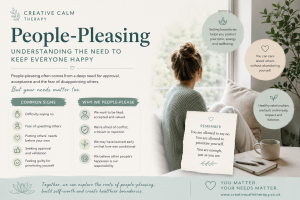
Common signs of people-pleasing include:
- Difficulty saying no
- Fear of conflict or confrontation
- Excessive apologising
- Seeking reassurance and approval
- Feeling responsible for other people's emotions
- Overcommitting to avoid disappointing others
- Neglecting personal needs and boundaries
- Avoiding expressing opinions that may cause disagreement
Although these behaviours may initially create harmony, they can lead to emotional exhaustion, anxiety, resentment, and reduced self-confidence over time.
The psychology behind people-pleasing.
From a counselling perspective, people-pleasing is rarely about simply being "too nice." Instead, it often develops as an adaptive response to earlier life experiences.
Attachment Theory and the need for approval.
Attachment Theory, originally developed by psychologist John Bowlby, suggests that our early relationships with caregivers shape how we relate to others throughout life.
Children who experience inconsistent emotional support may learn that approval, affection, or safety must be earned. As adults, they may become highly sensitive to rejection and seek acceptance by meeting the needs of others.
For some individuals, people-pleasing becomes a strategy for maintaining connection and avoiding perceived abandonment.
Conditional positive regard
Humanistic psychologist Carl Rogers introduced the concept of conditional positive regard, where love, approval, or acceptance is dependent on meeting certain expectations.
For example, a child may receive praise when they are helpful, compliant, or successful but experience criticism when expressing negative emotions or independent needs. Over time, they may internalise the belief:
"I am only worthy if I make other people happy."
This belief can continue into adulthood and fuel people-pleasing behaviours.
The "Fawn" response to stress.
In trauma-informed counselling, people-pleasing is sometimes understood through the concept of the fawn response. Alongside the more familiar fight, flight, and freeze responses, fawning involves attempting to stay safe by appeasing others.
Individuals who have experienced chronic stress, emotional neglect, or difficult family dynamics may learn that keeping others happy reduces conflict and creates a sense of security. While this response may have been protective in the past, it can become problematic when carried into adult relationships.
How People-Pleasing Affects Mental Health
Although people-pleasing often appears socially desirable, the long-term psychological costs can be significant.
Increased Anxiety
Constantly monitoring other people's reactions and trying to meet everyone's expectations can create ongoing stress and anxiety. Many people-pleasers worry excessively about making mistakes or upsetting others.
Low Self-Esteem.
When self-worth becomes dependent on external validation, confidence can fluctuate based on how others respond. Individuals may struggle to recognise their own value independent of what they do for others.
Burnout and Emotional Exhaustion.
Saying yes to every request can lead to overwhelm, fatigue, and feelings of depletion. Many people-pleasers spend so much energy caring for others that they neglect their own emotional and physical needs.
Relationship Difficulties.
Ironically, people-pleasing can sometimes weaken relationships. When individuals hide their true feelings, avoid honest conversations, or suppress their needs, relationships may lack authenticity and balance.
Why setting boundaries feels so difficult.
For many people-pleasers, boundaries trigger feelings of guilt, fear, or discomfort.
They may worry:
- "People will think I'm selfish."
- "They won't like me anymore."
- "I'll disappoint someone."
- "Conflict means something is wrong."
Counselling often explores these underlying beliefs and helps individuals recognise that healthy boundaries are not acts of rejection. Instead, they are essential components of respectful and sustainable relationships.
Boundaries allow individuals to protect their wellbeing while remaining compassionate and connected to others.
How counselling can help with people-pleasing.
Counselling provides a safe, non-judgmental space to explore the roots of people-pleasing behaviour and develop healthier ways of relating to others.
A counsellor may help clients:
- Identify patterns of approval-seeking behaviour
- Explore childhood experiences and attachment styles
- Challenge unhelpful beliefs about self-worth
- Develop assertiveness skills
- Build confidence in setting boundaries
- Learn to tolerate discomfort associated with saying no
- Strengthen self-compassion and self-acceptance
Through greater self-awareness and practice, individuals can learn that their needs, feelings, and opinions matter just as much as those of others.
Moving towards authentic relationships.
Recovery from people-pleasing does not mean becoming selfish, uncaring, or disconnected from others. Rather, it involves finding a healthier balance between caring for others and caring for oneself.
Authentic relationships are built on honesty, mutual respect, and healthy boundaries. They allow individuals to show up as their genuine selves rather than constantly seeking approval or avoiding disapproval.
Learning to say "no," express personal needs, and tolerate occasional disagreement can feel uncomfortable at first. However, these skills often lead to stronger self-esteem, healthier relationships, and greater emotional wellbeing.
Final thoughts.
People-pleasing is often rooted in a deep desire for connection, acceptance, and security. While these needs are entirely human, constantly sacrificing personal wellbeing to keep others happy can become emotionally costly.
Understanding the psychological foundations of people-pleasing is an important first step towards change. With support, self-reflection, and healthy boundary-setting, individuals can learn to value themselves not for what they do for others, but for who they are.
True connection does not require constant self-sacrifice. It grows from authenticity, self-respect, and the belief that your needs matter too.
How Creative Calm Therapy can help.
If you recognise yourself in these patterns of people-pleasing, you don't have to navigate them alone.
At Creative Calm Therapy, we provide a warm, supportive, and non-judgemental space where we can gently explore the roots of your people-pleasing behaviours. Together, we can work to understand where these patterns began, identify the beliefs that may be keeping them in place, and develop healthier ways of relating to yourself and others.
Whether you struggle with setting boundaries, saying no without guilt, low self-esteem, anxiety about disappointing others, or feeling responsible for everyone else's happiness, therapy can help you build greater self-awareness, confidence, and self-compassion.
Through a person-centred, creative and integrative approach, we can explore your experiences at a pace that feels comfortable for you, helping you reconnect with your own needs, values, and sense of self.
You deserve relationships where you feel respected, valued, and able to be your authentic self—not just for what you do for others, but for who you are.
Take the first step.
If you're ready to break free from people-pleasing patterns and start prioritising your own wellbeing, I'd be happy to support you on that journey.
To learn more about counselling with Creative Calm Therapy or to arrange an initial conversation, please visit www.creativecalmtherapy.co.uk or get in touch today.
You matter. Your needs matter. Change is possible, and support is available.